
How can we care for the people who keep us safe and healthy during times of crisis?
MORAL INJURY IN FRONTLINE WORK
Moral injury is a concept that names the persistent suffering, including shame or guilt, experienced by those who witness, perpetrate, or fail to stop acts of grievous harm. Distinct, but often overlapping with post-traumatic stress disorder (PTSD), moral injury can increase suicide risk and doesn’t respond well to commonly-used current treatment methods. Although the term originated in Veteran’s mental health circles, care providers in our healthcare systems and non-profit crisis shelter organizations have been experiencing similar harms, with greater frequency since the COVID-19 pandemic began. Frontline workers who care for children and youth are also uniquely impacted. Researchers who conducted large-scale studies on the impacts of climate change on youth mental health have also described the harm of moral injury for youth who feel betrayed and powerless to stop climate catastrophe.
In February, 2025, Ardath Whynacht and Catherine Baillie Abidi, with support from the Social Sciences and Humanities Research Council (SSHRC), hosted a public panel discussion and cross-sectoral symposium on moral injury for frontline care and protection workers. Both events sold out within a few days and representatives from healthcare, youth services, humanitarian organizations, street outreach workers and policy makers joined us for two days of discussion and planning for a future pan-Canadian project to explore the socio-political dimensions of moral injury in these sectors.
“Moral injury is the cost of injustice in the workplace […] It is the cost of failing to resource care and protection systems. And that cost is being borne by the helpers we rely on to feel safe and care for us in our times of need.”
– Dr. Ardath Whynacht
THIS IS NOT BURNOUT OR PTSD: MORAL DISTRESS AND OCCUPATIONAL INJURY IN FRONTLINE WORK
February 13th, 2025
Mount Saint Vincent University
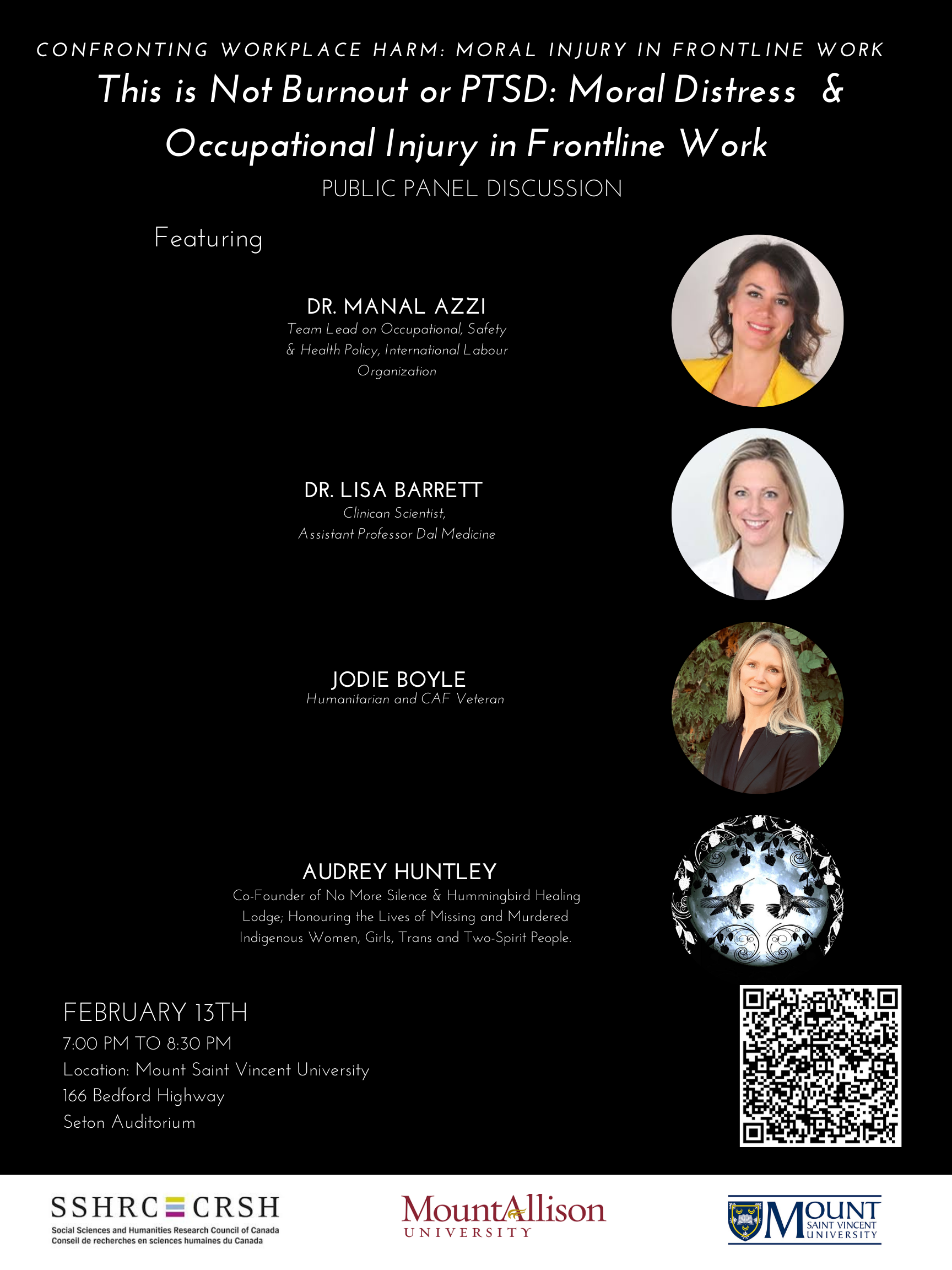
[click image to enlarge]
CONFRONTING WORKPLACE HARM: MORAL INJURY IN FRONTLINE WORK
February 14th, 2025
Mount Saint Vincent University
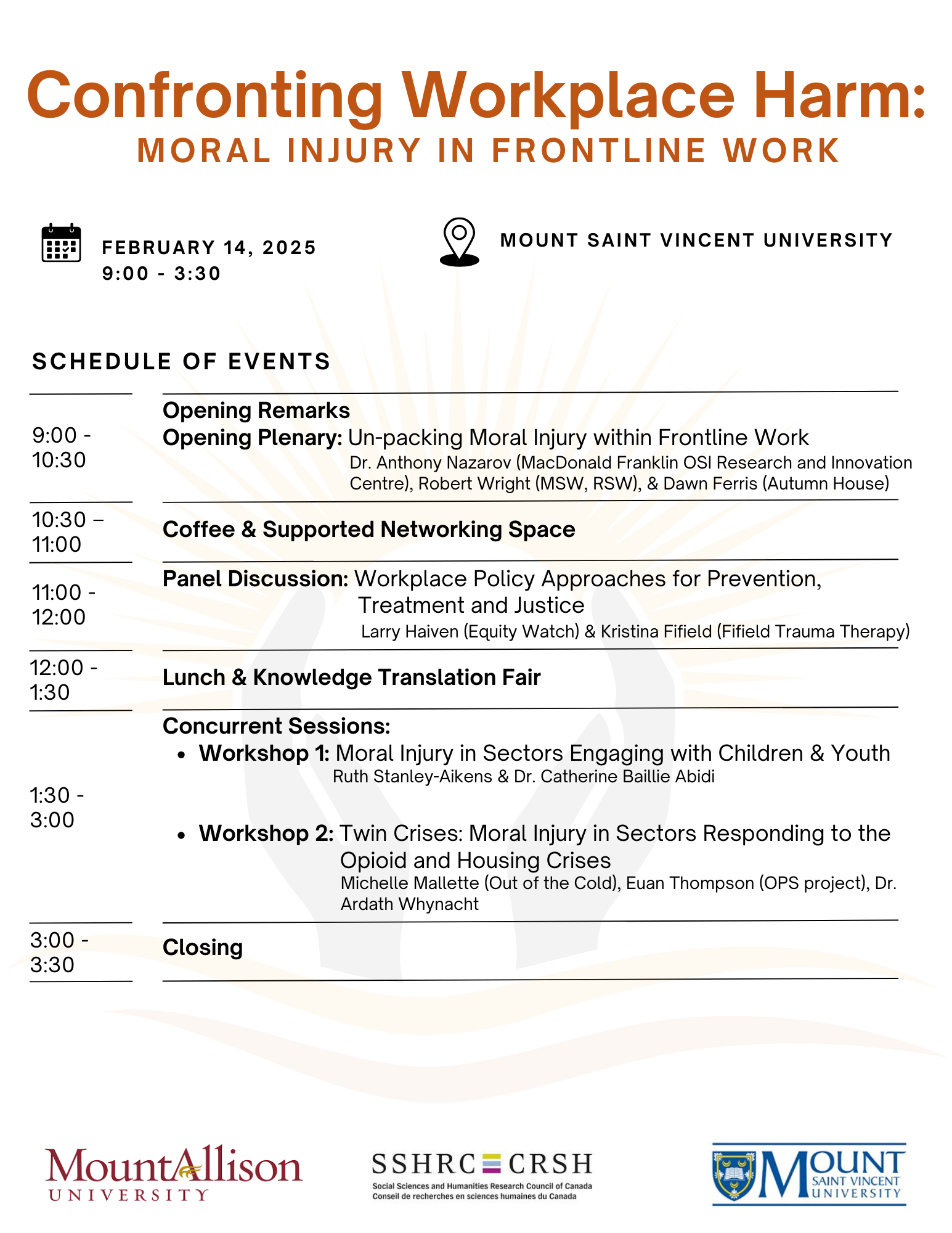
[click image to enlarge]
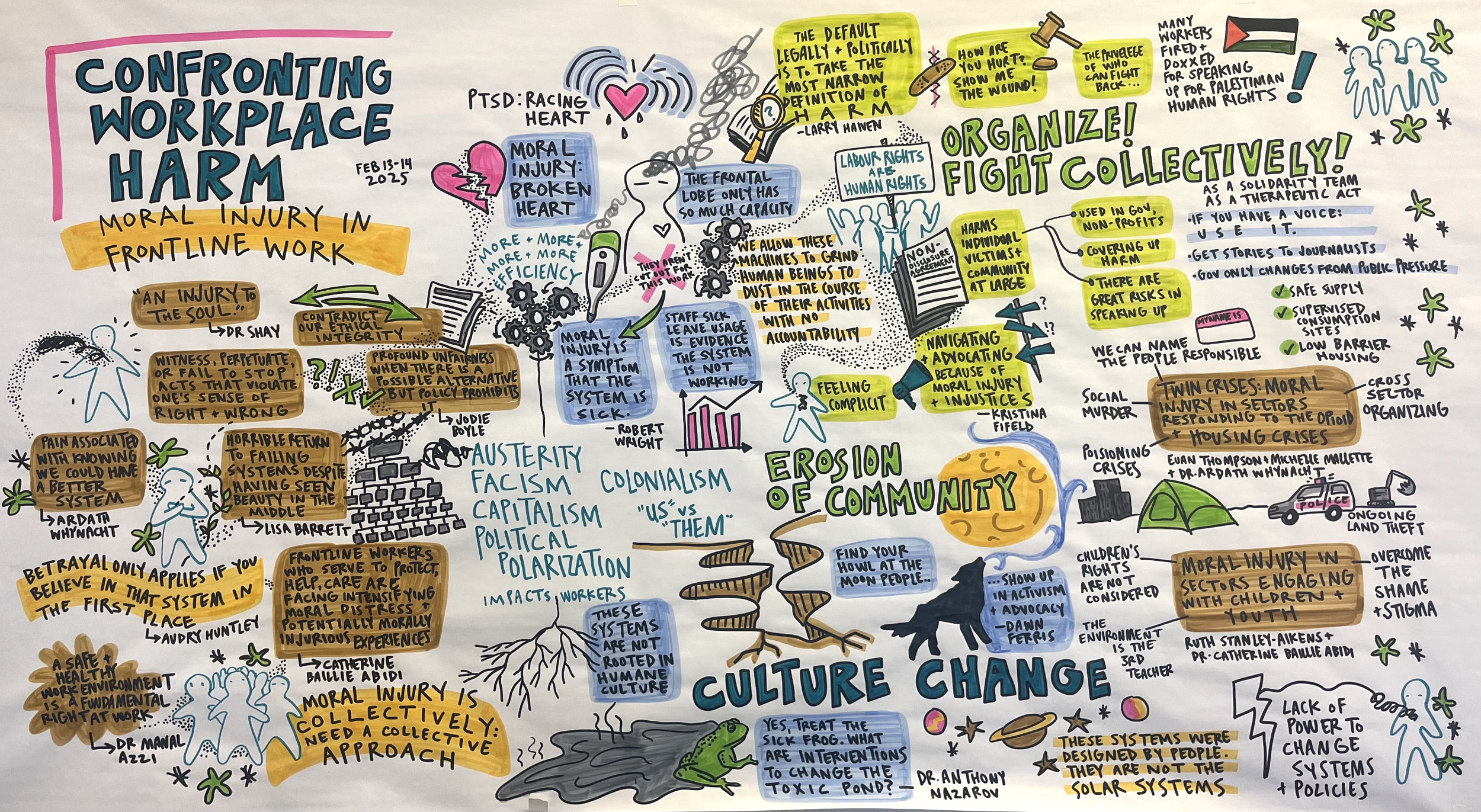
CONFRONTING WORKPLACE HARM: MORAL INJURY IN FRONTLINE WORK
[Graphic facilitation by Rach Derrah | click image to enlarge]
RESOURCES
MEDIA